
Meta Description
In hair tool ODM development, quotation should not start only from appearance or target price. Product clarity helps brands define the user, performance goal, structure, testing requirements and long-term market fit before development begins.
Why Product Clarity Comes Before Quotation in Hair Tool ODM Development
In hair tool ODM development, many projects start with one question:
“Can you quote this product?”
Sometimes the client sends a competitor image.
Sometimes it is a product link.
Sometimes it is only a rough idea.
At first glance, quotation seems to be the fastest way to begin.
But in real product development, especially for hair styling tools and hair care devices, quotation should not be the first step.
Before quotation, one question matters more:
Is the product direction clear enough to quote?
At Qumei, we believe product clarity comes before price.
This is not because we want to slow down the process.
It is because unclear product definition often creates higher cost, longer development time and greater risk later.
Why a Product Image Is Not Enough
Many brands begin by saying:
“We want something similar to this.”
A reference image can be useful.
It helps us understand the general appearance, category and market direction.
But a product image cannot answer the most important development questions.
For example:
- Who is the end user?
- Is the product for home users, salon professionals or travel use?
- What result matters most?
- Is the priority speed, smoothness, temperature stability, low noise, portability or hair protection?
- What function makes the product credible?
- Which structure supports the claim?
- What market standard or testing requirement should be considered?
- Is this product for a quick launch, a premium line or a long-term hero SKU?
Without these answers, a quotation can only be a surface-level estimate.
It may look efficient in the beginning, but it can easily lead to misunderstanding later.
The Risk of Quoting Too Early
When a hair tool project is quoted too early, several problems may appear.
1. The price is based on appearance, not function
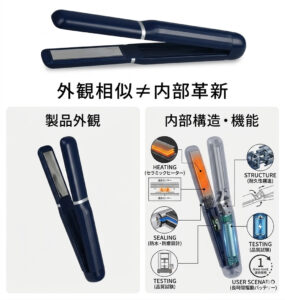
Two hair tools may look similar from the outside, but the internal structure can be very different.
A hair straightener, straightening brush, curling iron, hair dryer or ultrasonic hair care device may involve different decisions in:
- Heating structure
- Temperature control
- Plate material
- Motor system
- Sealing design
- Battery structure
- Button logic
- Safety requirements
- Testing standards
- Packaging and market compliance
If the quotation only follows appearance, the price may not reflect the real product requirement.
2. Important performance goals may be missed
For a Japanese salon brand, daily repeatability may matter more than a dramatic first-use effect.
For a D2C home-care brand, user experience, cleaning and product storytelling may matter more than technical specifications alone.
For a travel-focused product, weight, battery life, charging compatibility and portability may be critical.
If these goals are not clarified early, the product may be developed in the wrong direction.
3. Development changes become more expensive later
If the product direction changes after sampling or tooling, the cost of adjustment becomes much higher.
For example:
- A handle feels too short after user testing.
- A button position causes misoperation.
- A heating plate needs a different surface treatment.
- A formula leaves residue on an ultrasonic device.
- A hair dryer needs dual voltage, but the structure was not designed for it early.
- A waterproof design requires changes to housing, sealing and assembly.
These problems are not always visible at quotation stage.
They appear when the product is actually used.
This is why product clarity should happen before quotation, not after failure.
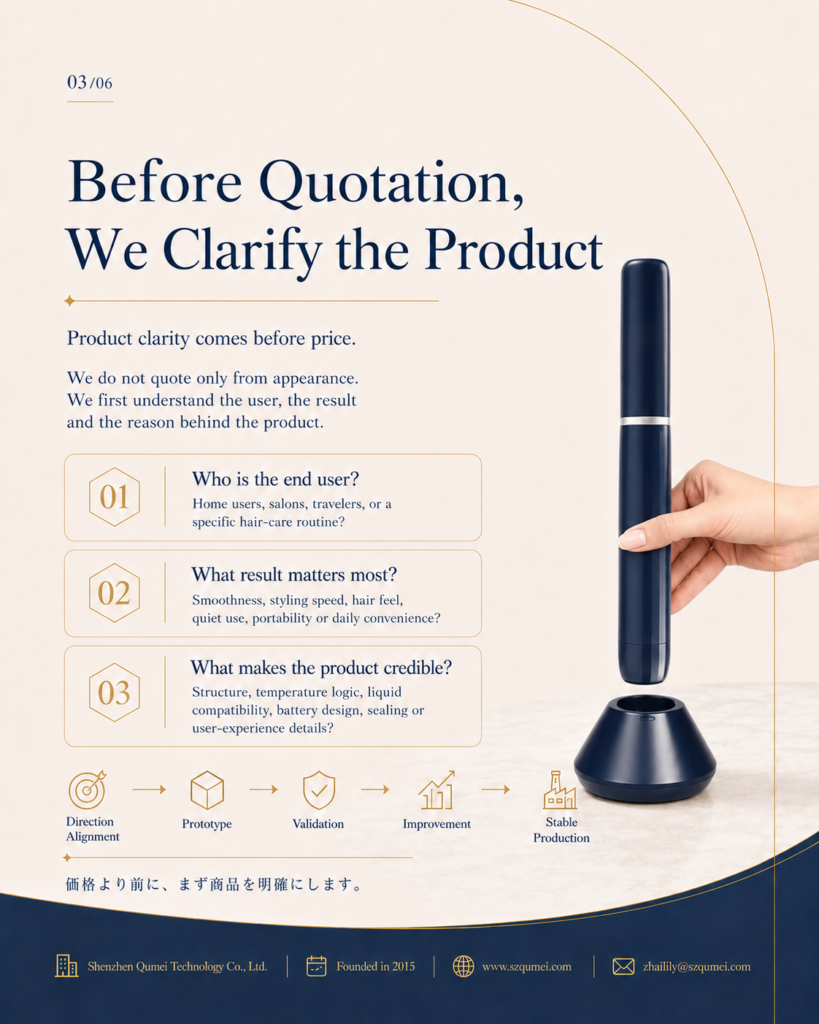
Three Questions We Ask Before Quotation
At Qumei, before giving a serious development quotation, we usually try to clarify three questions.
1. Who Is the End User?
A product for home users is not the same as a product for salon professionals.
A home user may care about:
- Easy operation
- Lightweight feeling
- Safety
- Storage
- Styling speed
- Daily convenience
A salon professional may care about:
- Long-term durability
- Stable performance
- Repeatability
- Hand fatigue
- Workflow efficiency
- Heat recovery
- Power cord durability
A travel user may care about:
- Compact size
- Battery life
- Dual voltage
- USB-C charging
- Lightweight design
- Storage and portability
The same product category can fail in different ways depending on who uses it.
That is why the end user must be defined before price discussion becomes meaningful.
2. What Result Matters Most?
Every hair tool needs a clear performance priority.
For example, a straightening brush may focus on:
- Smooth finish
- Lower pulling feeling
- Less dryness perception
- Better grip comfort
- Reduced misoperation
- Faster morning styling
A hair dryer may focus on:
- Lower noise
- Lightweight handling
- Faster drying
- Stable airflow
- Scalp comfort
- Dual voltage travel use
An ultrasonic hair care device may focus on:
- Formula compatibility
- Treatment experience
- Cleaning after use
- Waterproof and sealing design
- Continuous-use convenience
- Device + Formula product strategy
If the key result is unclear, the product may collect many features but lack a clear reason to exist.
A good ODM development process should not only ask:
“What function do you want?”
It should also ask:
“Why does this function matter to your user?”
3. What Makes the Product Credible?
A product claim needs structural support.
For example:
If a brand wants to communicate “hair care,” we need to discuss:
- Temperature logic
- Plate surface treatment
- Hair contact structure
- Formula compatibility
- Usage method
- Safety and cleaning
If a brand wants to communicate “professional durability,” we need to discuss:
- Cord swing test
- Heat stability
- Housing material
- Long-term use conditions
- Button and internal structure
- Reliability testing
If a brand wants to communicate “waterproof” or “liquid-compatible,” we need to discuss:
- Sealing structure
- Housing gap
- Charging port protection
- Button design
- Automatic dispensing or assembly method
- Cleaning and residue control
A claim becomes credible when the structure supports it.
This is where ODM development should be involved early.
Product Clarity Helps Brands Make Better Decisions
Product clarity does not mean every detail must be fixed from the beginning.
It means the main direction should be clear enough to avoid wrong decisions.
A clear product direction helps decide:
- Whether to use existing tooling or custom development
- Whether a functional prototype is needed before tooling
- Which structure should be prioritized
- Which test items should be planned
- Which materials or surface treatments are suitable
- Whether small-batch validation is recommended
- How to position the product in the market
This is especially important for brands entering a new category.
For example, a hair care brand may want to develop an ultrasonic hair care device.
The first question should not be:
“How much is the device?”
A better starting point is:
“What formula will be used, and what experience should the device create?”
Only after this becomes clear can the quotation become useful.
Why This Matters in the Japanese Market
In the Japanese beauty and hair tool market, users often pay attention to details that are not obvious at first glance.
They may not always complain directly, but they will judge the product through daily use.
For hair styling tools, small issues can affect long-term trust:
- A button that is easy to press by mistake
- A handle that feels too short
- A cord that becomes unstable after repeated use
- A dryer that feels too noisy
- A brush that pulls hair
- A plate that creates dryness perception
- A device that is difficult to clean after treatment use
These are not only after-sales issues.
They are product definition issues.
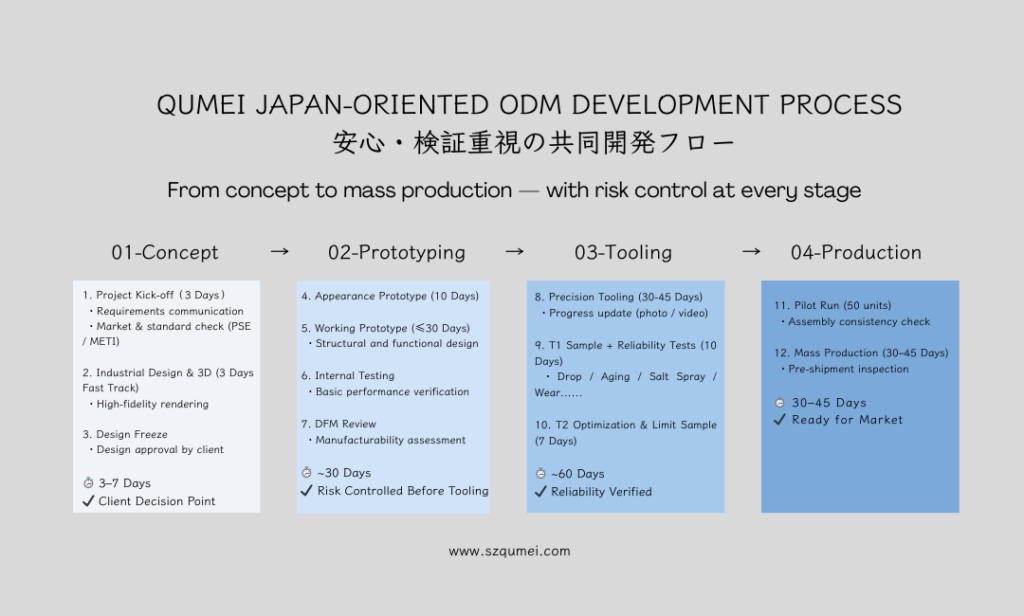
If the user scenario and product structure are clarified early, many risks can be reduced before mass production.
Existing Tooling or Custom Development?
Product clarity also helps decide whether a project should start from existing tooling or custom development.
Existing tooling may be suitable when:
- The market needs faster launch
- The brand wants to test demand with lower risk
- The product structure already matches the target use
- Color, packaging or small functional adjustments are enough
Custom development may be necessary when:
- The brand needs a unique structure
- The formula or usage method is special
- The product claim requires dedicated design
- The market positioning is premium
- Existing tooling cannot support the required experience
Neither path is always better.
The better path depends on the product direction.
That is why we do not push only one solution.
We first clarify the brand’s real need.
Product Clarity Reduces Long-Term Cost
Some brands worry that early clarification takes time.
But in many cases, it saves time.
A clear product brief can reduce:
- Repeated sampling
- Misunderstanding between brand and factory
- Unnecessary feature changes
- Tooling adjustment risk
- Quality disputes
- Delayed launch
- After-sales problems
In ODM development, the cheapest quotation is not always the lowest-risk choice.
A better quotation is one that matches the real product requirement.
That requires clarity.
How Qumei Supports Product Clarity
Qumei supports beauty brands, hair tool brands, salon care brands and trading companies from the early development stage.
Our support can include:
- Product direction discussion
- End-user and usage scenario clarification
- Existing tooling review
- Functional prototype discussion
- Structure and sealing advice
- Formula compatibility review for hair care devices
- Sample validation
- Reliability testing discussion
- Improvement before mass production
- Small-batch and stable production support
Our goal is not only to provide products.
Our goal is to help brands reduce development risk and make better product decisions before production.
A Practical Example: A Small Button Issue
A small button issue can reveal why product clarity matters.
In one hair styling tool project, customer feedback showed that a button became stuck after a period of use.
The defect rate was not high, but the issue still mattered.
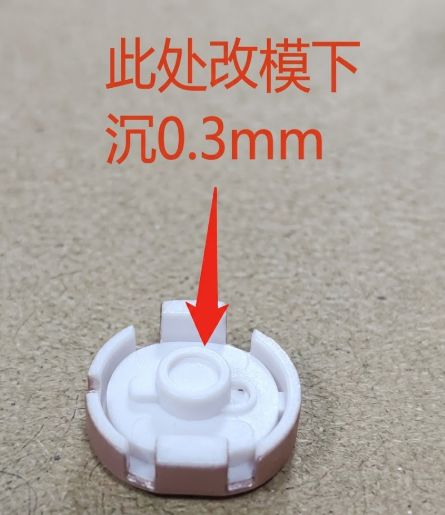
After disassembly and review, the root cause was related to the silicone pad under the button. The contact surface was flat, which created a risk of pad movement.
The improvement was not simply replacing the button.
The structure was modified by adding a recessed area and increasing the silicone pad thickness.
This kind of issue shows that quality improvement is not only inspection.
It is about finding the root cause, improving the structure and preventing recurrence.
For brands, this is why a development partner should understand structure, not only product appearance.
FAQ
Why can’t a factory quote directly from a product photo?
A product photo only shows appearance. It does not show internal structure, performance target, material choice, testing requirements, safety needs or user scenario. A meaningful quotation needs more product clarity.
Does product clarity mean we must finish the full specification first?
No. It means the main product direction should be clear enough to avoid wrong development decisions. Details can still be refined during sampling and validation.
Can existing tooling still be used?
Yes. Existing tooling can be a good choice for quick market testing, but it should still match the target user, usage scenario and brand positioning.
Why is this important for ultrasonic hair care devices?
Because the device must work with a formula, usage method, cleaning behavior, sealing structure and user experience. The product cannot be judged by device appearance alone.
When should Qumei be involved?
The earlier the better, especially before tooling. Early involvement helps clarify the product direction and reduce development risk.
Client Decision Checklist
Before asking for a quotation, brands can clarify:
- Who is the end user?
- What usage scenario is the product designed for?
- What result matters most?
- What makes the product credible?
- Is the product for quick launch or long-term positioning?
- Can existing tooling support the direction?
- Is a functional prototype needed?
- What testing or reliability concerns should be considered?
- What risks should be reduced before mass production?
Need support for your hair tool development project?
Qumei supports Japan-oriented hair tool ODM development from concept discussion to stable production.
Continue Exploring Qumei Insights
Explore more articles about hair tool development and Japan-market ODM strategy.