
The Evolution of Straightening Brushes in Japan
— A Strategic Category for Brand Profit Layers —
Straightening brushes occupy a unique position between hair dryers and flat irons.
In the Japanese market, this category has continued evolving since around 2015, shaped not only by technology upgrades, but also by changing user expectations.
For many Japanese consumers, the goal is not aggressive straightening.
It is:
-
natural styling
-
daily convenience
-
lower hair stress
-
comfortable long-term use
This is what makes the Japanese market different.
How the Category Evolved
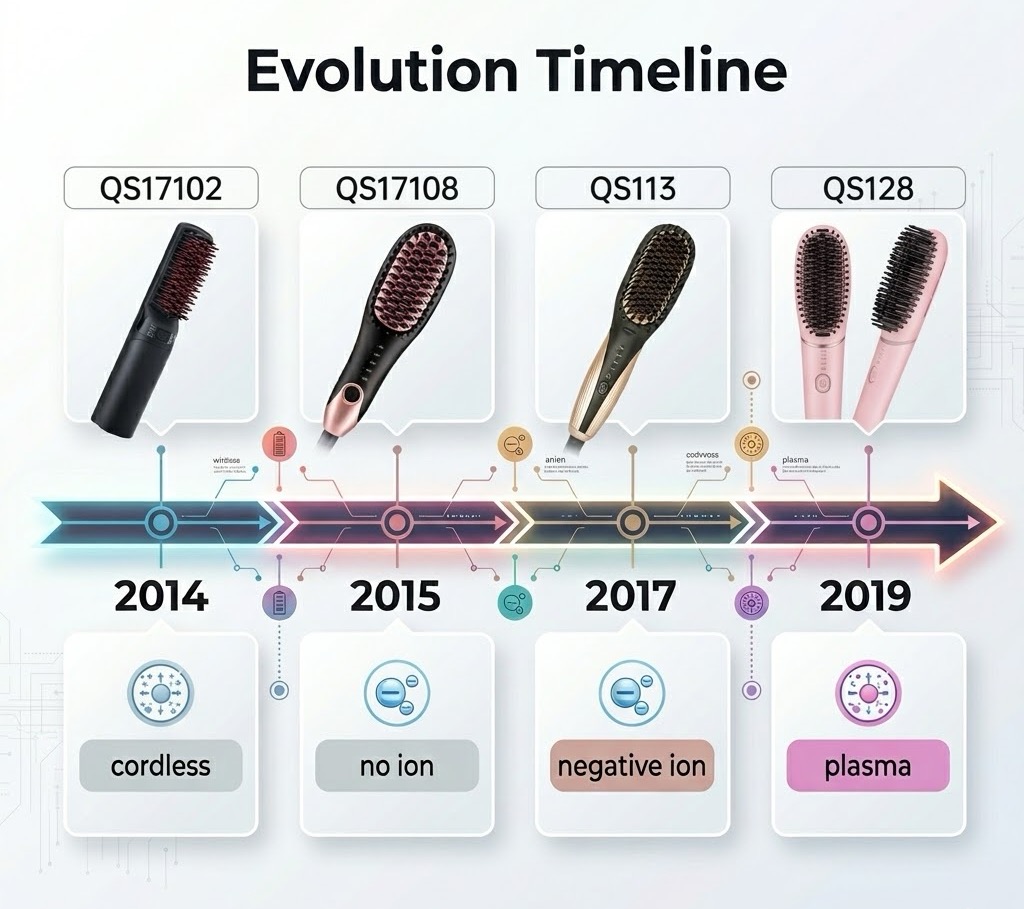
Please note : this is the evolution timeline of Qumei factory ,not the same timeline in straightening brush industry.
The early straightening brush models appeared in China around 2014.
Soon after, the category expanded into Japan and gradually evolved through several upgrade stages:
-
Basic models without ion technology
-
Negative ion models (around 2015)
-
Cordless models (around 2017)
-
Plasma technology models (around 2019)
This evolution reflects an important market characteristic:
Japanese consumers continuously expect improvements in user experience, not only new functions.
What Japanese Users Actually Care About
In many Western markets, stronger performance and higher specifications are often emphasized.
In Japan, users tend to focus more on:
-
lightweight handling
-
even heat distribution
-
lower hair damage
-
easy styling for bangs and hair ends
-
comfortable daily use
-
stable long-term performance
“Natural” is often valued more than “powerful”.
This also affects product structure decisions.
Size Design Is Also Profit Design
The straightening brush category has become increasingly segmented:
-
compact models
-
mid-size models
-
large-size models
-
cordless versions
-
mini models for daily touch-ups
In Japan, slightly smaller sizes are generally preferred.
However, mid-size models still maintain stable demand.
For brands, this is not only a product design issue.
It is also a pricing and profit structure strategy.
Different sizes and positioning create different profit layers within the same category.
Technology Upgrades Also Change Pricing Structure
Negative ion.
Cordless.
Plasma.
These are not simply feature upgrades.
They also reshape:
-
product positioning
-
pricing structure
-
perceived value
-
long-term competitiveness
For beauty brands, choosing the right upgrade timing is extremely important.
Why Prototype Development Matters in Japan
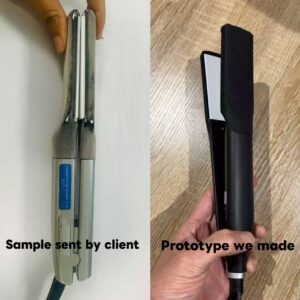
In our experience, many Japanese brands prefer to start from functional prototypes before full-scale production.
Not only to see the product itself.
But to verify:
-
development capability
-
communication clarity
-
actual user experience
-
size and handling
-
long-term product direction
For many Japanese clients, a prototype is part of the trust-building process.
Conclusion
Straightening brushes are no longer just styling tools.
They have become a long-term strategic category that supports brand positioning and profit structure.
For brands exploring the Japanese beauty device market, understanding user expectations and market evolution is becoming increasingly important.
At Qumei, we continue supporting beauty brands through market-oriented ODM development and long-term product thinking.
筆者について
ヘアケアツールのODM開発に携わり、日本市場向け製品開発を中心に経験。
 ボタン:シルクプレートのサンプル請求・開発相談はこちら
 Continue Exploring Qumei Testing Insights
Reliability testing helps beauty brands identify product risks before mass production.
- Testing & Quality Capability
- ODM Development Process
- More Hair Tool ODM Insights
- Discuss Testing Requirements
Planning a Hair Tool Project for the Japanese Market?
Before moving into tooling or mass production, it may be helpful to evaluate product positioning, prototype needs, reliability testing, and long-term quality risks.
Qumei supports Japan-oriented hair tool ODM development from concept discussion and functional prototype to reliability testing and stable production.