
- One design
- One development cost
- Two markets

How Success Is Defined in the Home Market
In the home beauty appliance market, success is driven by:- Positive online reviews
- Strong first impression
- Visual appeal during online purchase
- Continued use after the first few weeks
How Success Is Defined in the Professional Salon Market
In professional environments such as Japanese hair salons, success is measured differently. A professional hair tool succeeds when:- Stylists repeatedly choose it
- It remains in daily rotation
- It feels stable during long working hours
- Different users achieve consistent results
Why Home Hair Tools Fail
Home-use hair straighteners typically fail when:- Positioning does not match the target consumer
- The product feels complicated
- Online expectations do not match real performance
Why Professional Hair Tools Fail — Quietly
Professional failure is harder to detect. Stylists rarely complain openly; instead, they gradually replace the tool. Typical causes:- Fatigue during long sessions
- Result inconsistency between stylists
- Limited versatility in real salon workflow
- Subtle performance instability over time
The Risk of “One Product for Two Markets”
In OEM hair tool development, one common assumption is: “If it works for professionals, it will work for home users.” In practice, the opposite is often true.- Professionals tolerate fewer inconsistencies
- Home users tolerate less complexity
Why This Matters in the Japanese Market
Japanese consumers and salon professionals are highly sensitive to handling comfort, detail consistency, and purposeful design. In Japan, clarity builds trust.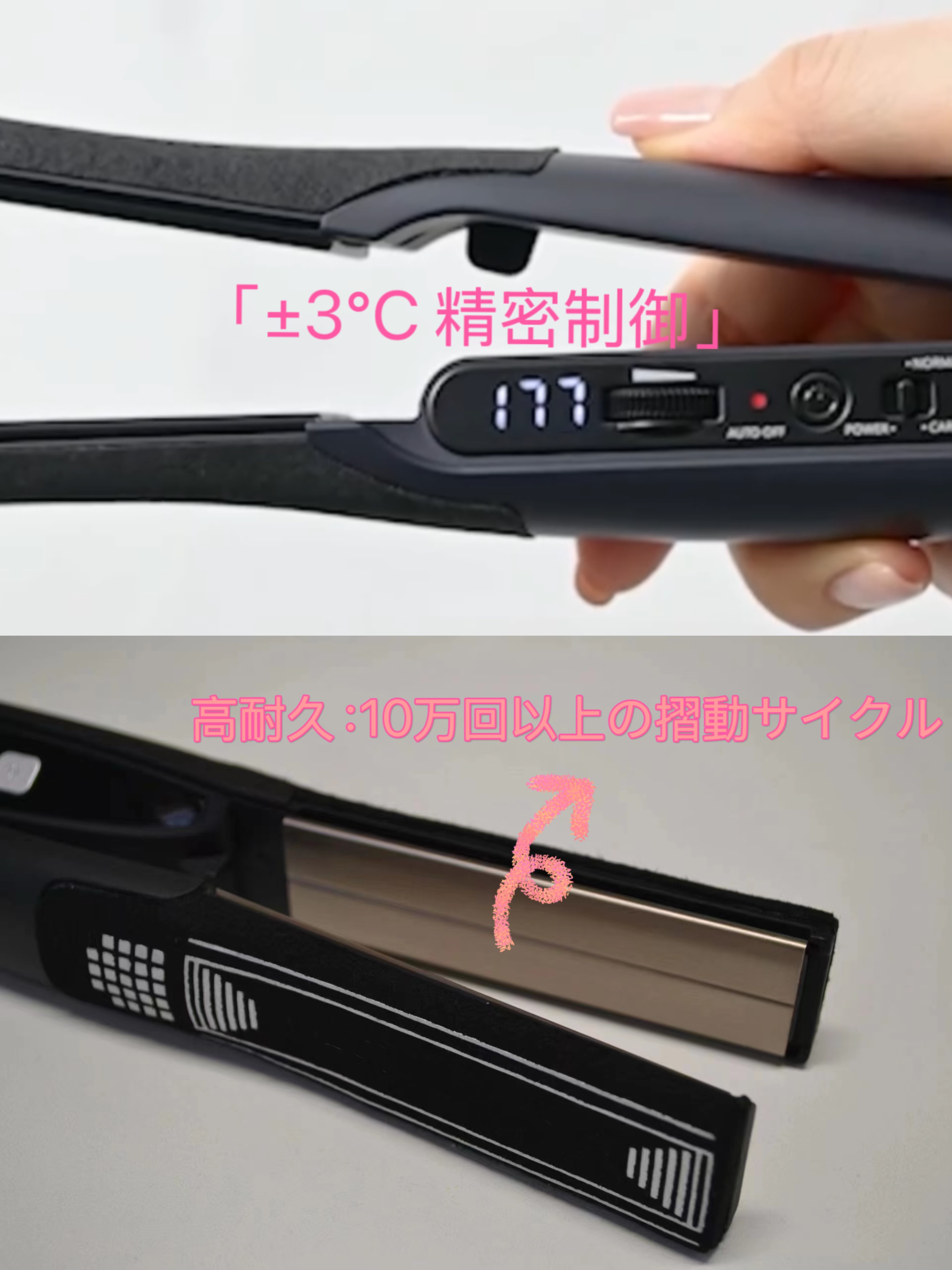
Designing With Clear Market Intent
Successful ODM development begins with one clear decision: Which market are we designing for?For Home Users
- Simplicity
- Safety
- Predictable performance
For Professional Salons
- Balance and reduced fatigue
- Repeatability and consistent results
- Workflow compatibility
Conclusion: Choose the Market Before the Product
The real question is not whether one product can serve both, but which market defines the design. Once that answer is clear, design direction becomes focused and long-term risks decrease significantly.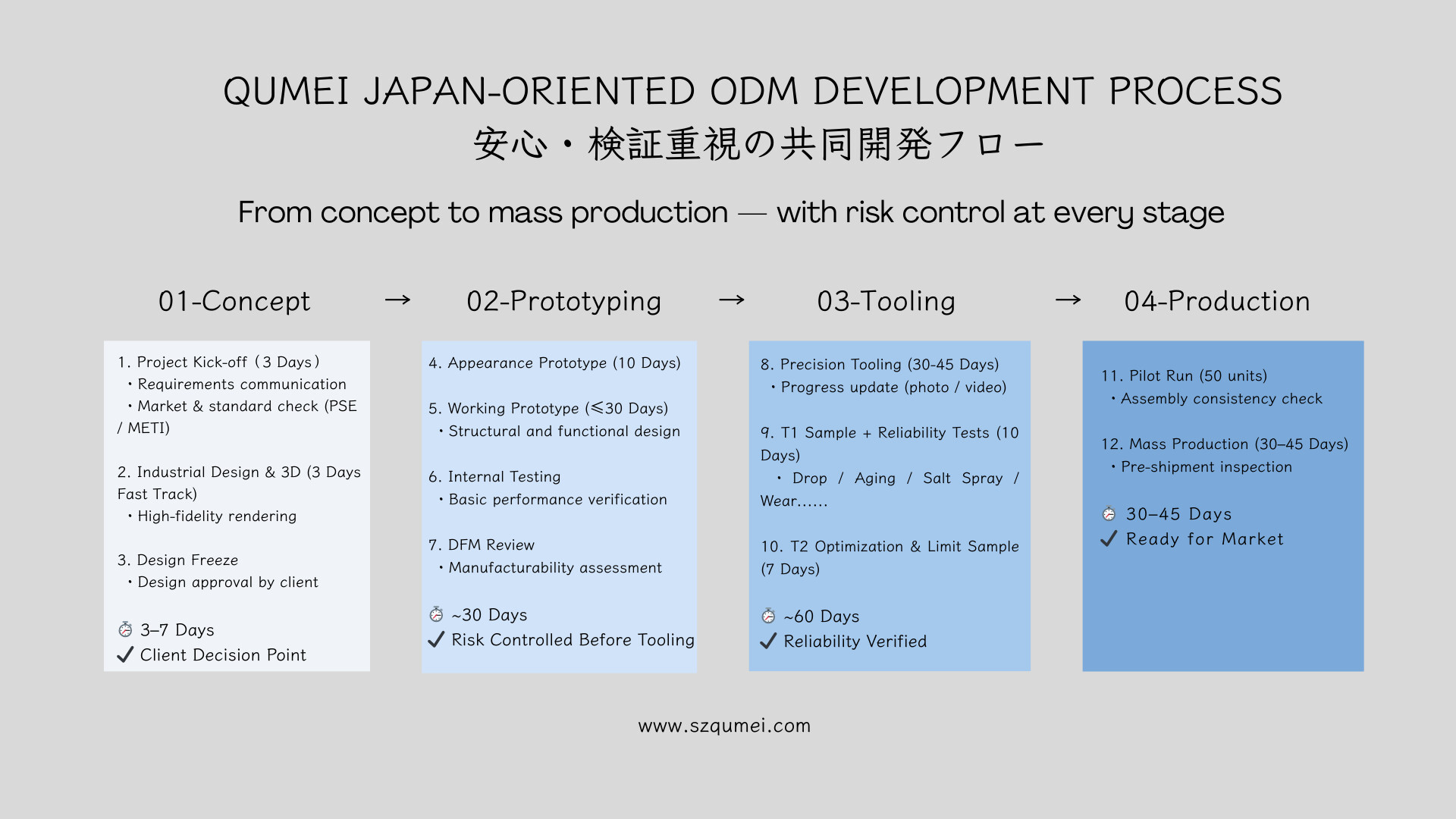
Need Support for Your Hair Tool Development Project?
Qumei supports Japan-oriented hair tool ODM development from concept discussion and prototype validation to reliability testing and stable production.
 Discuss Your Project with Qumei
Continue Exploring Qumei Insights
Explore more articles about hair tool development, testing, reliability, and Japan-market ODM strategy.
- Testing & Quality Capability
- ODM Development Process
- More Hair Tool ODM Insights
- Discuss Testing Requirements
Discuss Your Hair Tool Project with Qumei
Market Difference (Home vs Pro)
Why the Same Hair Tool Fails in Different Ways
Many beauty brands want to develop one hair straightener that serves both home users and professional salons.
At first glance, this seems efficient:
- One design
- One development cost
- Two markets
However, in real product development — especially in the Japanese market — this strategy often leads to failure in both segments.
Not because of poor quality.
But because home and professional markets fail in fundamentally different ways.
Understanding this difference is essential before starting OEM or ODM development.
How Success Is Defined in the Home Market
In the home beauty appliance market, success is driven by:
- Positive online reviews
- Strong first impression
- Visual appeal during online purchase
- Continued use after the first few weeks
In this segment, continuity determines success.
If a product creates excitement but is abandoned after several uses, it cannot be considered successful — even if initial sales are strong.
How Success Is Defined in the Professional Salon Market
In professional environments such as Japanese hair salons, success is measured differently.
A professional hair tool succeeds when:
- Stylists repeatedly choose it
- It remains in daily rotation
- It feels stable during long working hours
- Different users achieve consistent results
Trends are secondary. Endurance and repeatability matter more.
A tool that disrupts workflow will not survive in professional use — no matter how impressive it appears.
Why Home Hair Tools Fail
Home-use hair straighteners typically fail when:
- Positioning does not match the target consumer
- The product feels complicated
- Online expectations do not match real performance
Common causes include: too many features that confuse users, designs optimized for appearance instead of handling, and inconsistent results for beginners.
Why Professional Hair Tools Fail — Quietly
Professional failure is harder to detect. Stylists rarely complain openly; instead, they gradually replace the tool.
Typical causes:
- Fatigue during long sessions
- Result inconsistency between stylists
- Limited versatility in real salon workflow
- Subtle performance instability over time
The Risk of “One Product for Two Markets”
In OEM hair tool development, one common assumption is: “If it works for professionals, it will work for home users.” In practice, the opposite is often true.
- Professionals tolerate fewer inconsistencies
- Home users tolerate less complexity
Trying to satisfy both often leads to diluted identity and unclear positioning.
Why This Matters in the Japanese Market
Japanese consumers and salon professionals are highly sensitive to handling comfort, detail consistency, and purposeful design. In Japan, clarity builds trust.
Designing With Clear Market Intent
Successful ODM development begins with one clear decision: Which market are we designing for?
For Home Users
- Simplicity
- Safety
- Predictable performance
For Professional Salons
- Balance and reduced fatigue
- Repeatability and consistent results
- Workflow compatibility
Learn more about our professional straightener development process here.
Conclusion: Choose the Market Before the Product
The real question is not whether one product can serve both, but which market defines the design. Once that answer is clear, design direction becomes focused and long-term risks decrease significantly.
ボタン:シルクプレートのサンプル請求・開発相談はこちら